This is a playbook we wrote from our own experience: the lessons we picked up helping local restaurants grow anywhere from 24%+ month over month to a 7x jump in sales on their busiest day.
Not all of it will fit your restaurant. Every concept, menu, neighborhood, and team is different, which is exactly why we usually step in, build the strategy with you, and run it alongside you. But even on its own, there are real nuggets here you can put to work in your own dining room this week. Try them. Then tell us how it went.
We're sharing it for free for two reasons. First, we want to help you. That's the whole reason this company exists. Second, we want to learn from you: what worked, what didn't, and what we should sharpen for the next version. We won't pretend otherwise: we're a for-profit startup, and we want to grow fast, because the faster we grow, the more local restaurants we get to help.
So if you finish this and think, "I love it, but I don't have time to run all of it myself," that's exactly what we're here for. Book a call, tell us about your restaurant, and we'll take it from there. Who knows: we might just be the help you've been looking for a long time.
Either way, enjoy. We hope it helps. 🙂
Best,Choi
How to use this playbook. There's only one engine that grows a restaurant: regulars. Everything below is organized around the three things that create them: drive the crowd, make the experience flawless, and bring people back. Read it once, start to finish, to see the whole picture. Then keep it open as a checklist while you run your next campaign. None of this is theory. It's what we actually do for our clients, written down.
First, the three best ways to waste your money
Most restaurant marketing is money on fire. Three classics we see again and again:
Untracked influencers and ads. A creator posts, you get a spike, it fades. You never captured who walked in, so you can't bring a single one of them back. The money's gone with the buzz.
Blind loyalty programs. You end up handing free food to people who were already coming. The deal-seekers collect the punches. The guests you actually needed to win never change their behavior, and you never learn who churned, or why.
Mass SMS and email blasts. Low response, high opt-out. "Hi [first name]" isn't personalization. It's noise, and your guests can feel it.
They share one root cause: you're not capturing customer data, and your marketing isn't connected to what happens inside your four walls. It's like spraying water across the whole yard and hoping it lands on the right plant. The move is to put the hose on the roots: reach the right people, know who showed up, and follow up with them by name.
The only thing that grows a restaurant: regulars
Not a viral week. Not a one-night line. Regulars. A dining room full of people who keep choosing you is the only thing that compounds.
To turn a stranger into a regular, three things have to happen, in this order:
Drive new guests through the door.
Give them an experience worth coming back for.
Bring them back, again and again, until it's a habit.
Skip any one and the other two leak. Drive a crowd to a team that isn't ready and you've paid to show strangers your worst night. Nail the experience but never follow up and you're a great meal they forget by next week. Most vendors sell you exactly one piece (an ad tool, a loyalty app, a POS) and then wonder why the needle didn't move. This playbook is the whole loop. We do every part of it except cook.
Part 1: Drive the crowd
An empty table is your biggest cost. A crowded room is your best marketing. Hold onto that one sentence. Most of Part 1 follows from it.
So don't spread your firepower thin. The instinct is to trickle one influencer in per week. It feels safe, and it does almost nothing: a few guests scattered across seven days never trips the algorithm and never looks like a moment to anyone scrolling.
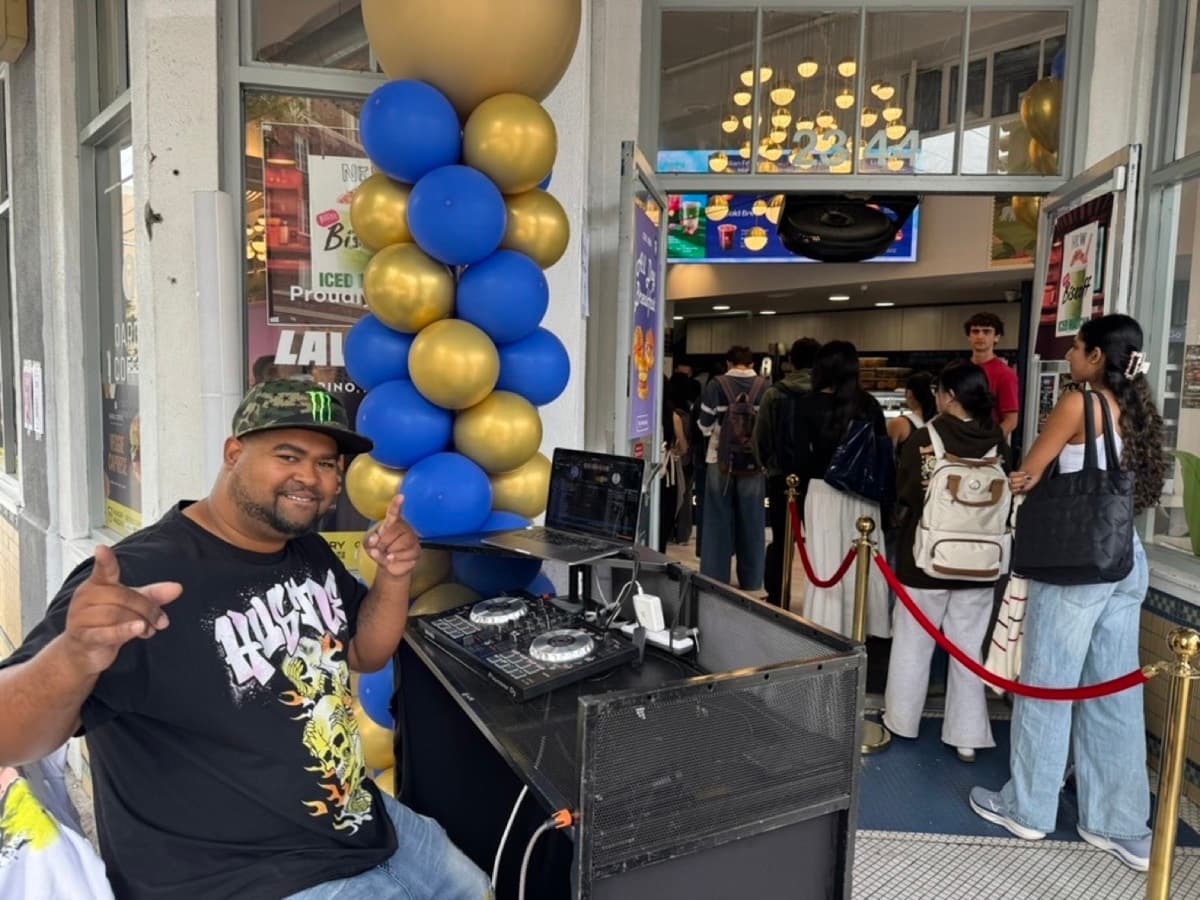
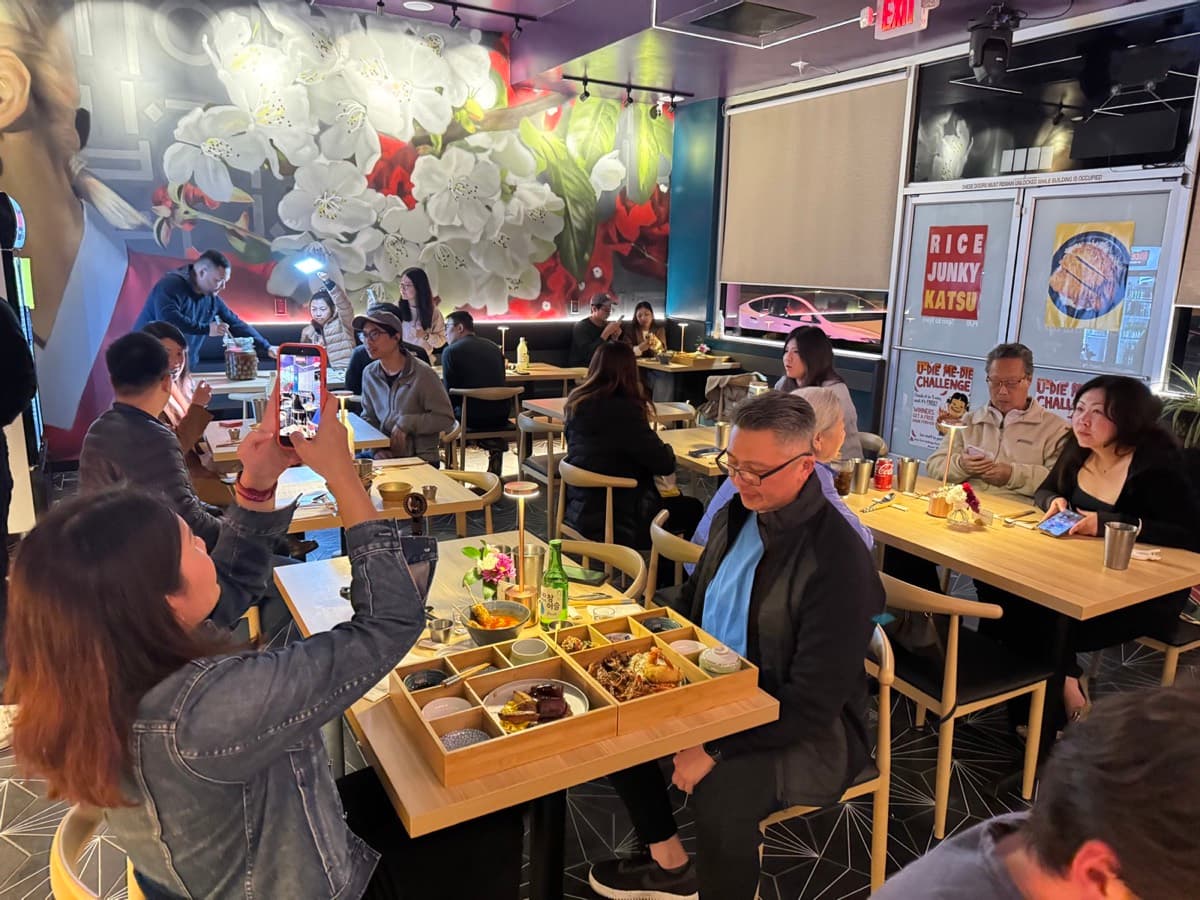
Instead, concentrate. Bring a wave of creators into the same window. The room fills, their content drops together, the platform notices the spike, and the ads running behind it all land at the same time. We call it an Influencer Tasting Party, and once it's happening, people show up because other people are showing up. That's the splash.
And one splash isn't a strategy. Repeated splashes are. Each round teaches you what your guests actually respond to, and the momentum compounds month over month.
The Influencer Tasting Party, in a nutshell
A wave of creators, one window. Five to ten (sometimes twenty) local creators in the same sitting, twice a month, for at least three months. Give them food credit, real hospitality, and something genuinely worth filming. Have them post around the same time so you hit the algorithm together.
Vet on engagement, not follower count. A creator with 8,000 obsessed local followers beats a "100K" account whose audience is three time zones away. Ask for the engagement and the local-audience numbers before you ever talk about reach.
Amplify with ads. The party makes the content. Paid reach puts it in front of the exact neighborhood that can actually walk in tonight, not just the creator's existing followers.
Make every creator a salesperson you can measure. Give each one a unique promo code or link. When their followers show up and redeem it, you learn who came and which creator sent them. Influencer marketing without tracking is just money you'll never see again.
Follow up, always. The party is the start, not the finish. Everyone who came is now a relationship. Don't let it fade. New menu, new LTO, happy hour, anything fresh? Bring them back in. Make them feel like part of the restaurant. Part of your story.
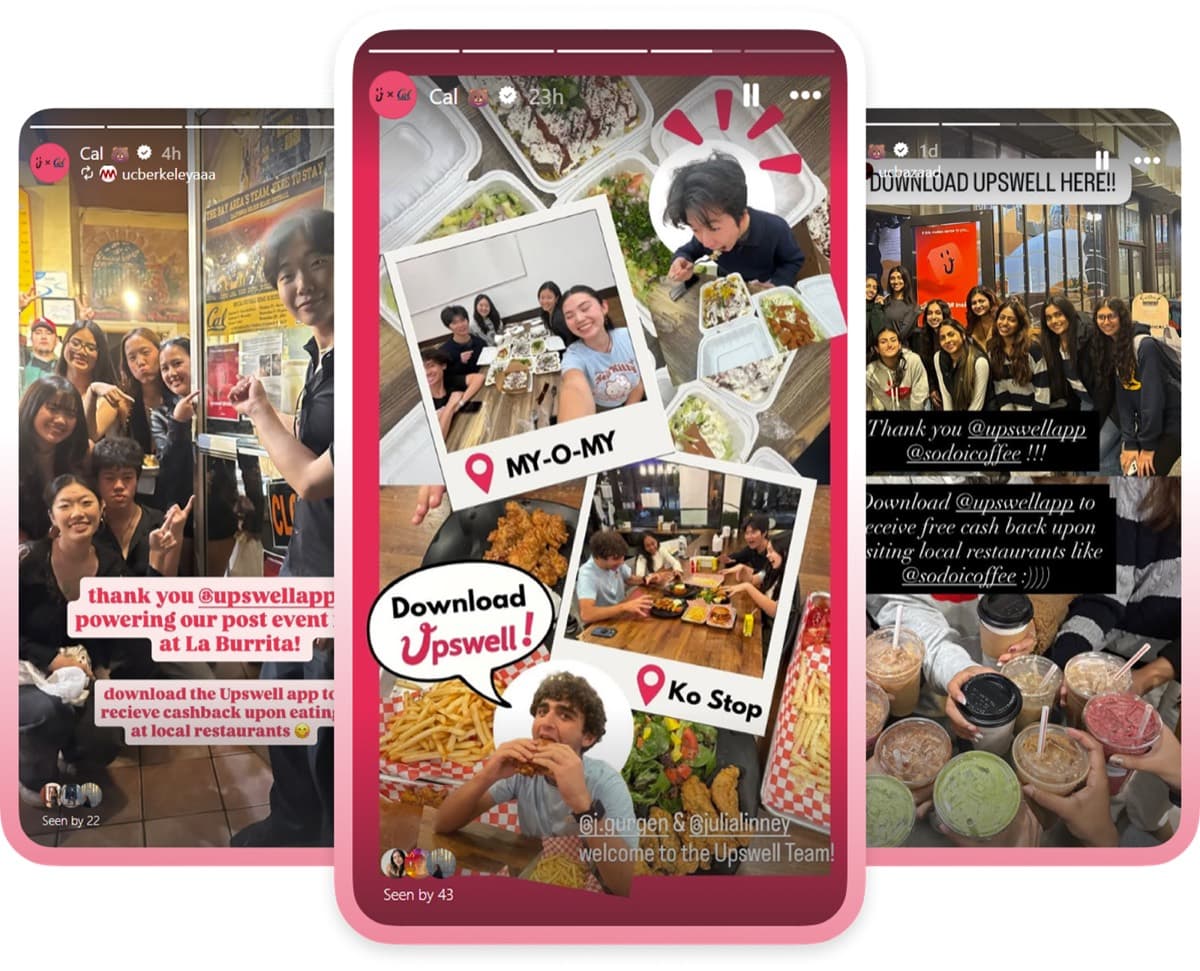
Running a restaurant near a campus? Throw a student-club party alongside your creator parties. Invite the clubs, feed them, and actually engage: get to know them, tell your story, listen to their feedback. Students are one of the few cases where we'll bend our no-discount rule: a dining pass at ~10% off is fine (they're students, and they're hungry 😉). Repeat it monthly if you can, or at least every two or three months.
Here's why it works: Students inevitably churn. You lose a quarter of them every year because they graduate, but student clubs don't. Clubs are how a lot of students discover local spots, and students tend to stay loyal once they find a place they like. Build relationships with the clubs and you own a renewing source of demand, instead of re-buying the same customers every fall.
Running the party like a pro
The summary above is the what. Here's the how, step by step. None of it is complicated. It's just rarely done well, and the details are where the results hide.
Plan the cadence. A single party won't do it. Plan for two parties a month, two weeks apart, for at least three months: say, seven creators in week one and three to four in week three. It takes repetition to build real relationships with the local creators who'll become your long-term ambassadors. And as you'll see in the ads section, a steady drumbeat of fresh content across the whole month matters as much as any single splash. Let creators bring a friend or two. Feed them and treat them just as well. Can't throw parties twice a month? That's okay. Ask the creators from your party to post a Story about two weeks later, and you keep the buzz going on a lighter cadence. A typical rhythm looks like this: Week 0Throw the party. Week 1Reels go up. Week 2Run ads on the reels. Week 3Creators post Stories to keep it alive. Week 4A little more ad spend, and the second party. Week 5Second set of reels, and so on.
Vet the right creators. There's no perfect formula (you never truly know until you see the result), but you can stack the odds with a few hard filters. They have to reach local people. A local creator, or at least one with real influence over your neighborhood. Engagement rate over follower count. Follower counts mean less every year. So much reach now comes from organic impressions served to people who don't even follow the creator. So look at the actual posts and reels: given the views, how many people like, comment, and share? That engagement is the signal. Where the followers live. Followers still matter, but where they are matters more than how many. Many creators make their audience insights public. Check how many of their followers are actually in your area. If they don't show it, just ask. If they won't share, move on. You have plenty of other options, and your time is precious.
They have to reach local people. A local creator, or at least one with real influence over your neighborhood.
Engagement rate over follower count. Follower counts mean less every year. So much reach now comes from organic impressions served to people who don't even follow the creator. So look at the actual posts and reels: given the views, how many people like, comment, and share? That engagement is the signal.
Where the followers live. Followers still matter, but where they are matters more than how many. Many creators make their audience insights public. Check how many of their followers are actually in your area. If they don't show it, just ask. If they won't share, move on. You have plenty of other options, and your time is precious.
Reach out, short and human. When you DM a creator you like, don't open with a wall of text about who you are, what you offer, and why you're interested. Keep it short and to the point, something like: "Hey, love your reels! We're [restaurant]. Interested in collabing?" It works far better than the essay. Once they reply, then you engage and share the details. You're starting a conversation, not delivering a pitch. And hold this mindset: you're not hiring them, you're collaborating. You serve them your best food and a great experience. They amplify the experience they had. That framing changes how you treat them, and they feel it.
Schedule around them, during your busy hours. Once they're in, agree on the details and lock a date. Most foodie creators have day jobs, so be flexible: keep Fridays or weekends open for collabs. And here's the counterintuitive part: most owners want creators in during the slow hours. Don't. Remember: empty table is cost, busy floor is the marketing. Bring them in when you're busy: The crowd ends up in their content, so you're amplifying that packed-house energy through their channel. The creator is also a guest. A full room tells them they picked the right place. Not busy yet? That's the whole reason you're doing this. Treat them beautifully, keep repeating the practice, and the crowd will come find you. Some creators will want to come earlier, or skip the group party entirely, and that's fine. What matters is that they post around the same time.
The crowd ends up in their content, so you're amplifying that packed-house energy through their channel.
The creator is also a guest. A full room tells them they picked the right place.
Not busy yet? That's the whole reason you're doing this. Treat them beautifully, keep repeating the practice, and the crowd will come find you.
Agree on comps, and write them down. Clarify compensation upfront and document it. It's usually a small cash comp plus food credit. Anything beyond that, they cover. Set the food credit high enough to cover the range of dishes you actually want them to show off. This is your highlight reel, so don't starve it.
Brief them: give them the ingredients, let them cook. Write out what you'd love them to capture: the themes, the message, the dishes, the story. This is your moment to brag about your masterpiece and the story behind it: how you opened the place after being inspired by your grandmother, how many batches it took to land the house hot sauce, and so on. That story is what your future customers fall for. And if there's a specific moment you want on camera, tell them: when the chef is about to send a flame up off the grill, wave the creators into the kitchen for the shot. But don't micromanage. Creators are creators for a reason. Respect their style and their ideas. You're handing them fresh ingredients. They're the cook.
Remind them, without it feeling like a reminder. Creators are busy and dates slip. Nudge them 3 to 4 days out, the day before, and the day of, but don't just push information at them. Make it warm: "Hey, only 3 days out! Any questions before you come?" "It's tomorrow, can't wait!" "Today's the day! Come hungry, we're going to stuff you with our best. 😋 See you soon!"
"Hey, only 3 days out! Any questions before you come?"
"It's tomorrow, can't wait!"
"Today's the day! Come hungry, we're going to stuff you with our best. 😋 See you soon!"
Host like it's a six-star night. Treat creators like the VIP guests they are. Reserve their tables, set out name cards (bonus points for a little decoration), and make the welcome personal. While they eat and film, engage: ask about their content, ask for honest feedback, and genuinely befriend them. They're your partner and your customer at the same time. And before they leave, ask who else might love the food. Foodie creators run in tight circles and are usually happy to introduce a few peers. Jot down the names and handles, and reach out after your creator posts. That's how a one-off party becomes a growing roster.
Say thank you. A day or two after, send a genuine thank-you note, and gently (warmly) confirm when they plan to post.
Get your staff ready for the rush. This is where money quietly dies if you're not careful. Picture a guest walking in, phone out, saying "I'm here for the reel, I've got the code," and your server has no idea what they're talking about. That's you lighting a hundred-dollar bill on fire. So get the team onboard before the crowd arrives: write down exactly what to do in plain bullets, print it, post it on the wall, and say it out loud in the staff group chat every day during the campaign. And treat everyone who came because of a creator like a VIP, because they are. Most are walking in for the first time, with expectations set high by the reel. Meet those expectations and you've taken the first step toward a new regular (see Make it flawless below). Exceed them and they become ambassadors.
Run the ads: amplify the best content. The party hands you a library of real, native content. Now put paid fuel behind it. Get each creator's ad code (their partnership / branded-content code) so you can run their reel as an ad from your own account. Instagram's how-to. Let it breathe first. Once you have the code, give the reel a day or two to collect organic views, then start ads on day three or four. Use Ads Manager, not just "Boost." Boosting leaves most of the controls on the table. In Ads Manager you can actually test. What's worked well for us: set the objective to engagement, optimize for 2-second views, and run it for about a week. One campaign, all the reels under it. Put every creator's reel as a separate ad inside a single campaign and let Meta's AI allocate the budget. Not every reel performs the same, and the system shifts spend toward the winners on its own. Since what you want is eyeballs, this beats hand-splitting the budget. Get creative with targeting. "Audience+" lets the AI find people likely to hit your goal. That's fine, but test against it, because every restaurant is different. Boosting from Instagram lets you set a hyper-local radius, say 2 miles. A wider radius often maximizes total reach. And play with interests and demographics: K-pop fans for a Korean BBQ spot, frequent travelers or commuters for an office-district lunch place, tourists near a landmark. There's a lot to play with. The way to learn is to try a setup, record the result, and brainstorm the next experiment with your team.
Get each creator's ad code (their partnership / branded-content code) so you can run their reel as an ad from your own account. Instagram's how-to.
Let it breathe first. Once you have the code, give the reel a day or two to collect organic views, then start ads on day three or four.
Use Ads Manager, not just "Boost." Boosting leaves most of the controls on the table. In Ads Manager you can actually test. What's worked well for us: set the objective to engagement, optimize for 2-second views, and run it for about a week.
One campaign, all the reels under it. Put every creator's reel as a separate ad inside a single campaign and let Meta's AI allocate the budget. Not every reel performs the same, and the system shifts spend toward the winners on its own. Since what you want is eyeballs, this beats hand-splitting the budget.
Get creative with targeting. "Audience+" lets the AI find people likely to hit your goal. That's fine, but test against it, because every restaurant is different. Boosting from Instagram lets you set a hyper-local radius, say 2 miles. A wider radius often maximizes total reach. And play with interests and demographics: K-pop fans for a Korean BBQ spot, frequent travelers or commuters for an office-district lunch place, tourists near a landmark. There's a lot to play with. The way to learn is to try a setup, record the result, and brainstorm the next experiment with your team.
Keep the momentum between splashes. After the ad week, ask your creators to post a Story (around week three) to keep the buzz alive, right as your next round of creators is coming in. Run a little competition among them: a reward for the most-viewed reel and one for the highest engagement rate. Views are an absolute number (the big accounts tend to win), while engagement is a percentage (a nano or micro creator can absolutely beat a mega one). Kick the rewards off soon after the campaign starts, so the early hype doesn't fade before the finish.
After the ad week, ask your creators to post a Story (around week three) to keep the buzz alive, right as your next round of creators is coming in.
Run a little competition among them: a reward for the most-viewed reel and one for the highest engagement rate. Views are an absolute number (the big accounts tend to win), while engagement is a percentage (a nano or micro creator can absolutely beat a mega one). Kick the rewards off soon after the campaign starts, so the early hype doesn't fade before the finish.
Part 2: Make it flawless
A crowd you can't convert is a party, not a business. Here's how a first-timer becomes a regular.
It takes 3 to 4 flawless experiences to make a regular
That's the number. Land three or four genuinely great visits and roughly 70% of those guests stick. The classic mistake is pouring all your marketing into the first visit and leaving visits two through four to luck.
Here's a mechanic that fixes it (watch the video):
A guest walks in for the first time. "First time here? Here's a red napkin so the whole team knows to take care of you, and the rib dinner's on us." That rib costs you about $4 and sells for $15. At the end of the meal: "So glad you loved it. Next time, you have to try the chicken." You write it on the back of a card: bring this back, and the chicken's on me. They return for the chicken. Then you point them to the cheesecake. Third visit. Each item costs you around $4, about $12 total, to manufacture three flawless experiences. Acquiring a regular the usual way runs $80 to $120. You just did it for $12, at 70% odds.
The mindset shift: don't do discounts. Give free items. Discounts cheapen the check and train bargain-hunters. That's a habit you never want to teach your guests. A free item does the opposite: it builds a relationship, and it walks the guest toward that magic number of visits.
Train your team like an athlete
You can't fix service with a once-a-year handbook. Dump everything at once, like drinking from a fire hose, and the team forgets it by the weekend. Drip learning works the way a workout does: 5 to 10 minutes a day, every shift, and you see the change in about three months. Nobody gets a six-pack in a day.
Strongly recommended: run pre-shifts.
You can't expect a sports team with low energy to win the game. Every pre-game, you make sure the team is ready, with high energy, a sharp game plan, and the knowledge to back it up. You can't skip pre-shift.
The rhythm:
Pre-shift is a broadcast, not a memo. What's new, who earned a shout-out, the story behind today's special. It sets the tone for the floor.
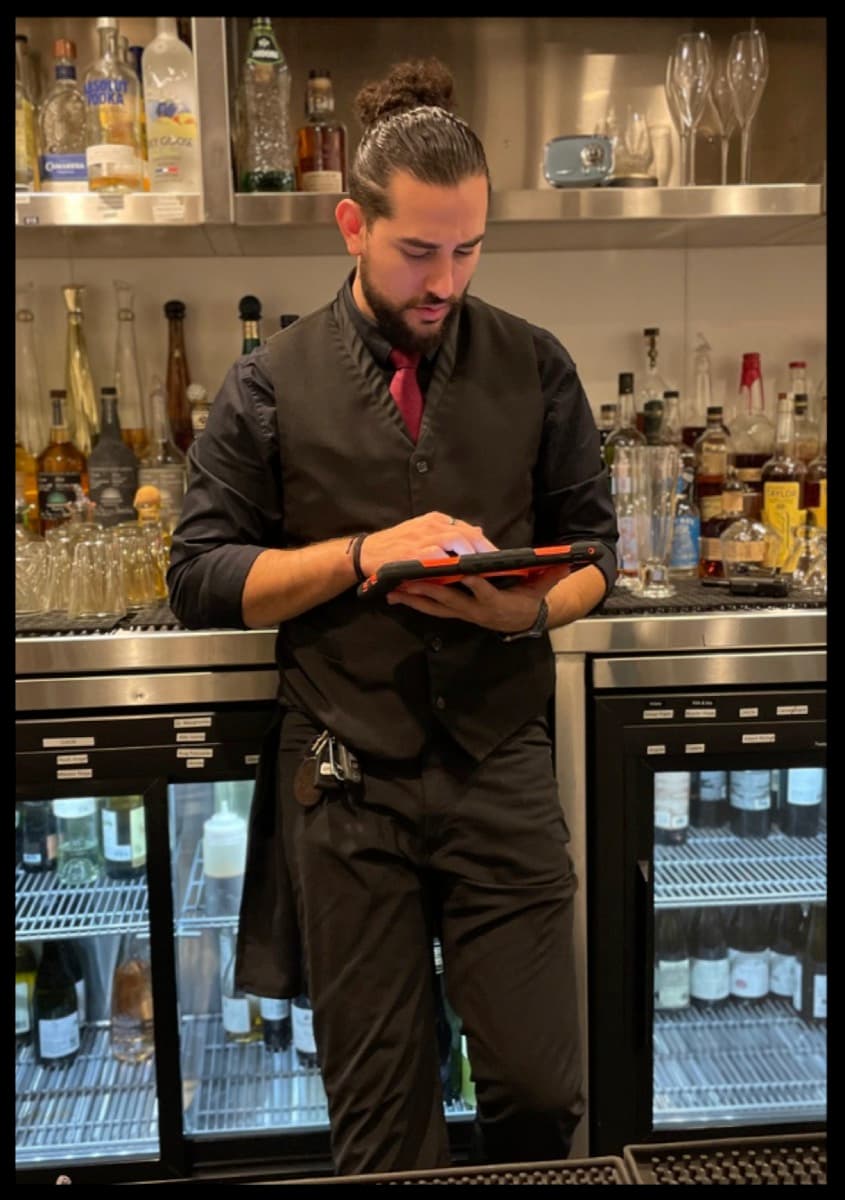
Reps reinforce it. A quick quiz or flash drill on a tablet or phone, so every server, whenever their shift starts, locks in what was just shared. The quiz isn't to punish anyone. It shows you exactly where the team's menu knowledge has gaps.
It compounds. Pre-shift inspires, reps build muscle memory: sports camp for hospitality. Energy on the front end, instinct on the back end.
And it's real money. At a high-standard steakhouse we ran this with, year over year: per-cover sales up 8%, voids down 48%. Voids are a silent leak. A confident server who knows the menu cold plugs it.
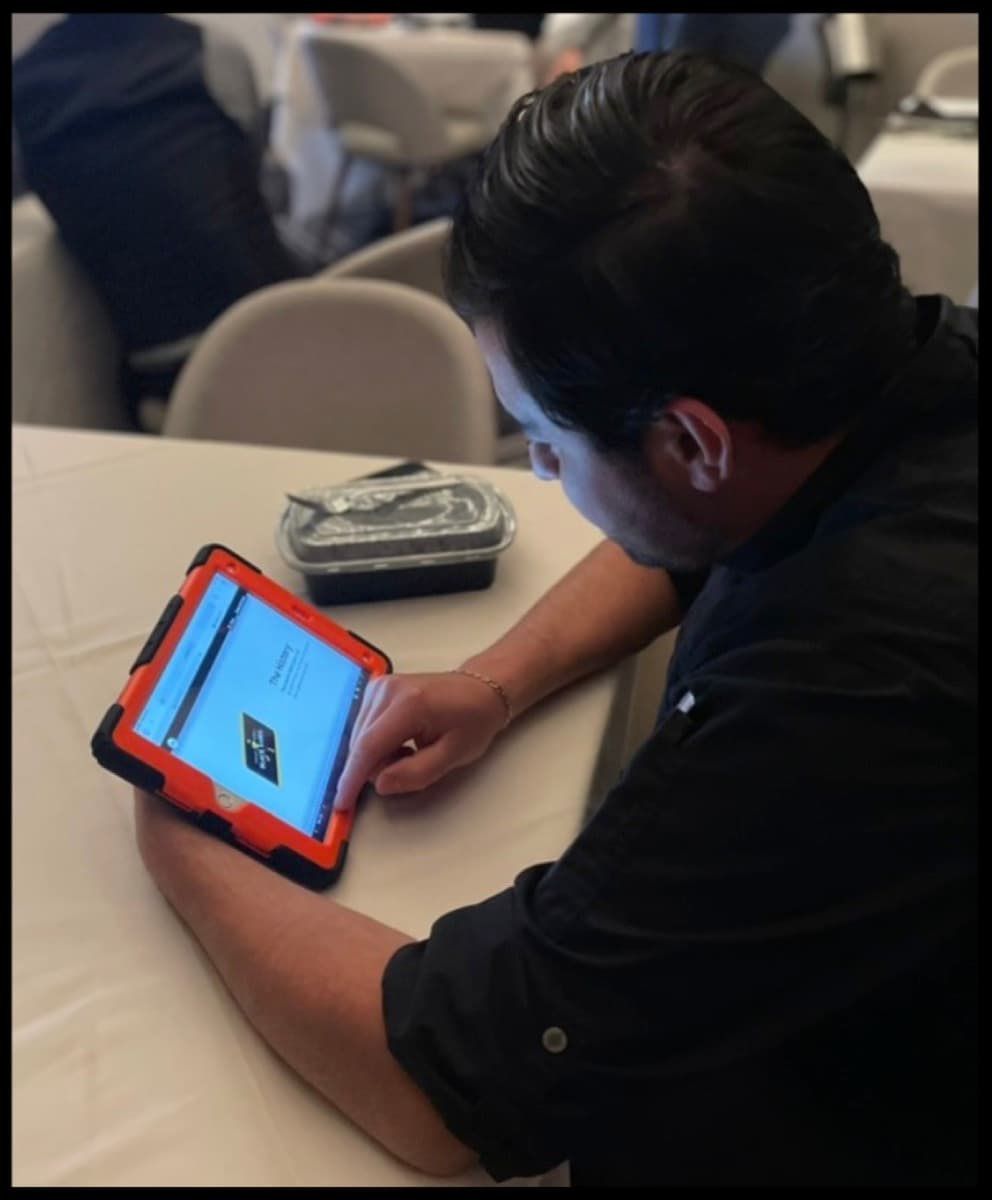
Five-minute reps on a tablet, between tickets and before the shift.
Get feedback that's actually true
Ask a guest "How was everything?" and you'll hear "good," then watch them quietly torch you on Yelp. Open questions get polite lies.
Ask the opposite: "Tell us one thing we could do better." Small, specific, easy to answer. "Honestly? A touch too spicy." Now you've got something real to work with.
Then close the loop. Two weeks later: "Hey Choi, we added a few spice levels after your note. Thank you for that. Come back, it's on us." That's how a complaint turns into a regular.
Don't Yelp us, help us.
And remember Zappos: a pair of shoes didn't fit, so they sent a handwritten apology and a box of chocolates, and turned a frustrated customer into a lifelong one. A bad experience isn't what loses a guest. How you handle it is what decides whether they ever come back. A bad experience handled well is your single best shot at a regular. So don't fear the feedback. Chase it.
A note on catering
If you also cater and want more of it, the most durable strategy isn't a separate campaign. It's relentlessly great experiences on your floor. Guests who had an awesome time go back and talk about it: at the office, at home, with friends. And when a catering occasion comes up, they're the one who says, "oh, what about that place I keep raving about?" Great in-house experiences quietly fill your catering calendar. The two feed each other: dining drives catering, and catering drives dining.
Part 3: Bring them back
You've got the crowd and the experience. Now make it repeat.
Capture who walked in, at the door
The codes and vouchers from Part 1 aren't discounts. They're identity. A redemption tells you who came, when, and what they tried. Without that, every guest is a stranger again tomorrow, and you're back to spraying the yard.
Personalize with context, not a name field
Real personalization isn't "Hi [first name]." It's:
"Junia, hope that pulled-pork sammy with the vinegar sauce hit the spot on that rainy night. Looks like rain again tomorrow… come grab another. 😉"
That's a message a human would send a friend. You can't hand-write it for 4,000 guests, which is exactly why almost nobody does it. Find a tool that remembers the context so the message stays human at scale. If you find one, use it. If it costs money, pay for it. You won't regret it. Personalization done right is how you win most of the competition before it even starts.
Turn your regulars into a sales force
Once a guest hits your definition of a regular, ask them to bring people. A regular who loves you is your cheapest, most credible marketing. They just need a reason and a nudge to bring three friends on Friday. And when they do, treat those friends like the first-timers they are: give every one of them the "red napkin" treatment. Your regular becomes an ambassador, proud that the people they brought are being looked after.
Win the 7 o'clock decision
You're not really competing with the restaurant down the street. You're competing with everything a guest could do at 7pm tonight: cook at home, order delivery, the other twenty restaurants, movie night, or just the couch. Staying in the feed, in the inbox, and top-of-mind at the exact moment someone decides. That's the whole game. Everything in this playbook is, in the end, about winning that one moment more often.
Running a restaurant is hard
The fact that you started one already makes you braver than most people will ever be. So first, be proud of yourself. You chose work that takes enormous time and effort just to keep other people fed, healthy, and happy. Real kudos.
We wrote this playbook out of respect for you. We wanted to be useful by sharing what we've learned putting everything we have into making our clients happy. We've still got a lot to learn, but sharing what we know so far didn't need to wait.
If there's one lesson above the rest, it's this: everything is connected, and there is no silver bullet. Marketing and training are connected. You can't grow in a lasting way by only driving customers. Your team has to be ready to serve the crowd you bring. Your servers should know what the restaurant is saying publicly (that's marketing), and some of your training material (where the brisket comes from, why it's special) is itself great marketing. Marketing, training, loyalty, operations: you have to connect them all, and that takes real time and dedication.
Drive the crowd and train the floor and capture the data and personalize the follow-up and keep the splashes coming, month after month, without letting quality slip the moment it gets busy. That's the full loop, and the pieces only pay off when they're connected. Most vendors hand you one piece and wish you luck.
So run the full loop yourself, at least once, and you'll learn exactly where your gaps are: what you can handle and what you can't. Only then do you really know who to hire to fill which gap.
And if you don't have time for any of it, that's what we're here for. We run the whole loop, end to end, so you can just host.
One more time: running a restaurant is hard. I grew up watching my grandmother run a tiny takoyaki shop in a small town in Japan. She looked genuinely happy at that counter, but every night at home, she'd wash off the exhaustion with a few glasses of beer. Every single night. (She passed from liver cancer.) Running a restaurant is hard. That's why we want to help.
So call us, email us, for feedback, for questions, for anything. If you have ideas for driving customers, questions about running ads, or you just want to vent, book a call. We're always happy to listen.
Want us to run it for you, or just want to rant and vent? Either works.